


Avocado pasta: five creamy and creative variations
A fruit with a creamy texture, avocado is certainly well known for being eaten on its own, as in avocado toast, or as the main ingredient of the famous guacamole. However, not everyone knows that this fruit also works wonderfully in lots of pasta dishes. For example, there are countless combinations of avocado pasta that…
Tenuta Donna Fina
06/11/2026

A fruit with a creamy texture, avocado is certainly well known for being eaten on its own, as in avocado toast, or as the main ingredient of the famous guacamole. However, not everyone knows that this fruit also works wonderfully in lots of pasta dishes. For example, there are countless combinations of avocado pasta that you can make every day by pairing just a few simple ingredients.
From pairings with citrus fruits to combinations with courgettes or pancetta, not forgetting prawns or Parmesan. In this article you will find 5 recipes for avocado pasta that are quick and easy to make, to banish monotony in the kitchen and bring all the flavour of avocado to the table.

Avocado pasta: why it is so versatile
Deciding to make an avocado pasta dish is always a starting point for unleashing your culinary creativity. It is an extremely versatile base that you can adapt to your own taste and to the needs of the people you are cooking for.
Where does this versatility come from? Avocado flesh can be blended, mashed or chopped, while its delicate flavour means it can be paired with more savoury, fresh or crunchy ingredients. The five recipes in this article cover a range of possible combinations, with both vegetarian and non-vegetarian versions, such as those with pancetta or prawns.
How to choose the right ripeness
A key step in preparing any dish that includes avocado is choosing the right fruit, starting with its ripeness. A soft avocado is particularly suitable for blending, while one that is ripe but firm can still be used for cubes or garnishes.
At the same time, if the fruit is still unripe, it is best to let it ripen before using it, while an avocado that is overly soft or has spoiled flesh should be thrown away, as it is no longer fit to eat. To find out how to choose the perfect avocado, we suggest reading the guide on our blog.
The role of pasta cooking water and lemon juice
Coming back to avocado pasta, the pasta cooking water plays a particularly important part in making it. It is the liquid that helps to make the cream smoother and to spread it more evenly over the pasta.
Lemon or lime juice, which often features in these recipes, also plays an important role: it adds acidity and can limit the browning of the flesh, although it should never be thought of as a preservative for the dish. In addition, the cream should not be cooked for long: on the contrary, it is best to add it to the pasta off the heat or directly in the bowl, so that the dish stays as creamy as possible.
Avocado pasta: 5 recipes to try
For those who love experimenting in the kitchen and always trying new recipes, here are 5 ways to make avocado pasta. For the recipes that follow, there is one essential step: making the avocado cream. Simply blend the avocado flesh with an acidic ingredient, oil and a little cooking water, then add it to the pasta off the heat and stir until creamy.
Here is a summary table of the recipes in this article, before moving on to the ingredients and method for each one:
| Recipe | Difficulty | Approximate time | Recommended pasta shape | Key ingredient | Serving |
| Avocado and lemon pasta | Easy | 20 minutes | Spaghetti or linguine | Lemon and basil | Hot |
| Avocado pasta with crunchy courgettes | Easy | 30 minutes | Short pasta | Sautéed courgettes and almonds | Hot or warm |
| Avocado and pancetta pasta | Medium | 25 minutes | Rigatoni or mezze maniche | Crispy pancetta | Hot |
| Avocado and prawn pasta | Medium | 30 minutes | Linguine | Prawns and lime | Hot |
| Avocado and Parmesan pasta | Easy | 25 minutes | Short pasta | Parmesan and toasted breadcrumbs | Hot or warm |
Avocado and lemon pasta
Among the basic avocado pasta recipes, this is the ideal one for learning how to turn avocado into a creamy sauce without adding cream. Lemon juice adds freshness and helps to keep the colour of the flesh brighter. Avocado and lemon pasta takes about 20 minutes and just a few simple steps: here is how to make it.
Ingredients for 4 people
- 320 g linguine or spaghetti;
- 2 ripe avocados, for about 300 g of flesh;
- 1 lemon;
- 4 tablespoons extra virgin olive oil;
- 8 basil leaves;
- 1 small clove of garlic, optional;
- 3–4 tablespoons pasta cooking water;
- salt;
- black pepper, optional.
Method
- Bring a pan of water to the boil, add salt and cook the pasta for the time indicated on the packet;
- Halve the avocados, remove the stone and scoop the flesh into a blender jug;
- Add the juice of half a lemon, the oil, the basil, the garlic if using, and a pinch of salt. Blend until you have a smooth cream;
- Set aside a cup of the cooking water, then drain the pasta al dente;
- Transfer the pasta to a bowl and add the avocado cream. Add a little cooking water at a time, stirring until you reach the consistency you want;
- Finish with black pepper and a little lemon zest, but only if the fruit is suitable for eating with its peel;
- Serve the pasta straight away so that it is as creamy as possible.
Avocado pasta with crunchy courgettes
This avocado pasta recipe takes about 30 minutes, and the courgettes are not blended with the avocado but sautéed separately so that they keep a more distinct texture.
This way, the cream stays smooth while the vegetables add a delicately crunchy element. However, if you do not like different textures in a pasta dish, you can blend the courgettes together with the avocado.
Ingredients for 4 people
- 320 g short pasta;
- 2 ripe avocados, for about 300 g of flesh;
- 350 g courgettes;
- 1 small shallot;
- 1 lemon;
- 4 tablespoons extra virgin olive oil;
- 1 tablespoon chopped parsley;
- 2 tablespoons flaked almonds, optional;
- 3–4 tablespoons cooking water;
- salt;
- pepper.
Method
- Wash the courgettes, trim the ends and cut them into small, even cubes or into rounds that are not too thin;
- Chop the shallot and soften it in a frying pan with 2 tablespoons of oil;
- Add the courgettes, turn the heat up slightly and cook them for 8–10 minutes, stirring often. They should soften without losing all their texture;
- Meanwhile, cook the pasta in salted water;
- Blend the avocado flesh with the juice of half a lemon, the remaining oil, a pinch of salt and a little cooking water;
- Drain the pasta al dente and transfer it to the frying pan with the courgettes;
- Turn off the heat, add the avocado cream and stir quickly. If necessary, loosen the sauce with a little more cooking water;
- Finish with parsley, pepper and lightly toasted almonds, if using;
- Serve the pasta hot, as soon as it is ready.
Avocado and pancetta pasta
In this version, which takes about 25 minutes, the pancetta adds a savoury note and a crunchy texture to the dish, creating a contrast with the smooth, delicate avocado cream. To keep the dish balanced, it is best not to add too much salt to the sauce.
Ingredients for 4 people
- 320 g rigatoni or mezze maniche;
- 2 ripe avocados, for about 300 g of flesh;
- 150 g diced pancetta;
- 1 small shallot;
- 1 lemon;
- 2 tablespoons extra virgin olive oil;
- 4 tablespoons cooking water;
- 1 tablespoon chopped parsley;
- black pepper;
- salt, if needed.
Method
- Put the pancetta in a cold frying pan and cook it over a medium heat, without adding oil, until golden and crisp;
- Transfer the pancetta to a plate lined with kitchen paper, leaving the cooking fat in the pan;
- Chop the shallot and soften it in the same pan for a few minutes;
- Cook the pasta in plenty of salted water;
- Blend the avocado flesh with the juice of half a lemon, the oil and 2 tablespoons of cooking water;
- Drain the pasta al dente and transfer it to the frying pan with the shallot;
- Turn off the heat and add the avocado cream, stirring until the sauce is evenly distributed;
- Add half of the pancetta, the parsley and the pepper;
- Taste before adding more salt, then plate up and finish with the remaining pancetta. Serve the pasta as soon as it is ready.
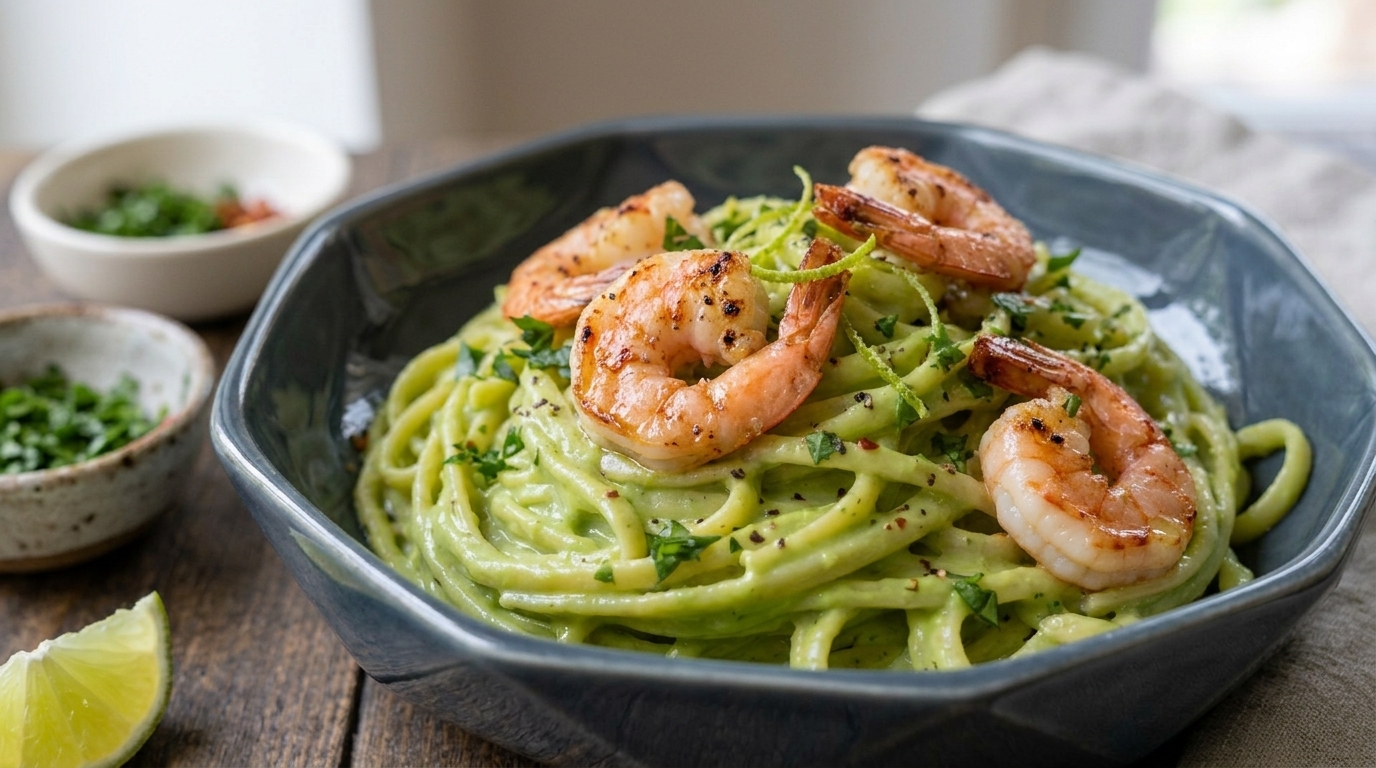
Avocado and prawn pasta
This seafood version of avocado pasta can be made in about 30 minutes. The avocado and prawns make a delicate sauce, in which the creaminess of the fruit complements the taste of the sea without overpowering it. Lime and parsley add a fresh note, while the prawns are cooked separately and added to the pasta only at the end to preserve their texture and flavour.
Ingredients for 4 people
- 320 g linguine;
- 300 g peeled prawns;
- 2 ripe avocados, for about 300 g of flesh;
- 1 lime;
- 1 small clove of garlic;
- 4 tablespoons extra virgin olive oil;
- 1 tablespoon chopped parsley;
- 3–4 tablespoons cooking water;
- salt;
- pepper;
- chilli, optional.
Method
- Heat 2 tablespoons of oil in a frying pan with the garlic. Add the prawns and cook them for a few minutes, turning them, until they are opaque and cooked through;
- Remove the garlic, season with salt and set the prawns aside;
- Cook the linguine in salted water;
- Blend the avocado flesh with the juice of half a lime, the remaining oil, a pinch of salt and a little cooking water;
- Drain the pasta al dente and transfer it to the frying pan you used for the prawns;
- Turn off the heat, add the avocado cream and stir. Add more cooking water only if the sauce is too thick;
- Add the prawns and the parsley, stirring gently;
- Finish with pepper, a few drops of lime and, if you like, a little chilli.
Avocado and Parmesan pasta
The last version of avocado pasta in this article is a simple dish that takes about 25 minutes. Parmesan makes the avocado cream more savoury and indulgent. For a contrasting texture, the pasta is finished with toasted breadcrumbs, which can be flavoured with a little basil or parsley.
Ingredients for 4 people
- 320 g short pasta;
- 2 ripe avocados, for about 300 g of flesh;
- 60 g grated Parmesan;
- 40 g breadcrumbs;
- 1 lemon;
- 4 tablespoons extra virgin olive oil;
- 4 tablespoons cooking water;
- 1 tablespoon chopped parsley or basil;
- salt;
- black pepper.
Method
- Tip the breadcrumbs into a non-stick frying pan and toast them over a low heat for a few minutes, stirring often;
- When they are golden, turn off the heat and add the chopped parsley or basil. Transfer to a bowl;
- Cook the pasta in plenty of salted water;
- Meanwhile, blend the avocado flesh with the juice of half a lemon, the oil and 2 tablespoons of cooking water;
- Drain the pasta al dente and transfer it to a large bowl;
- Add the avocado cream and the grated Parmesan, then stir until the sauce is evenly distributed;
- Adjust the consistency with more cooking water and add salt only after tasting;
- Finish with black pepper and toasted breadcrumbs;
- Serve while the pasta is still hot, adding more Parmesan only if you wish.
Which avocado to choose for each recipe
But which avocado should you choose for each recipe? Although there are differences between avocado varieties, the choice of fruit for each recipe depends mostly on its texture.
In general, and as mentioned above, a ripe, soft avocado is better suited to being turned into a cream, and therefore into a sauce for the recipes in this article. A ripe but firmer avocado, on the other hand, is preferable if you want to add the fruit in cubes rather than as a cream, to garnish the dish or to stir into the avocado cream itself for a play of textures.
What remains essential is always to choose avocados that are undamaged and fit to eat: if the fruit is not yet ripe enough, or the flesh is too soft, smells unusual or shows signs of spoilage, it is important to discard the avocado.
How to store avocado pasta
When it comes to storage, it is best to eat avocado pasta freshly made, as avocado flesh tends to oxidise on contact with air and the cream sauce may change colour and texture.
On top of this, there are the storage rules for perishable ingredients such as prawns and pancetta. In terms of taste and result, too, avocado pasta is definitely best freshly made, when it is still hot or warm and much creamier.
Tenuta Donna Fina avocados for your pasta
Among the varieties of Sicilian avocado grown at Tenuta Donna Fina, you will find organic Hass avocado, with its buttery texture and subtle hazelnut notes, and organic Fuerte avocado, soft and delicate, with a slightly herbaceous aftertaste.
Grown on the slopes of Mount Etna, in Sicily, our avocados owe their unique flavour to the properties of the soil and the volcanic climate of the Etna area. Our avocado varieties are grown using certified organic methods, producing fruit rich in nutrients and healthy fats that are great for your health.
If you would like to try the avocado pasta recipes in this article, you can choose Tenuta Donna Fina products, pairing them with citrus fruits such as lemons or limes. Discover all the products available in our online shop and find your favourites!
FAQ – Frequently asked questions about avocado pasta
How do you make avocado pasta?
To make avocado pasta, blend the flesh of a ripe avocado with lemon juice, oil and a little cooking water until you have a smooth cream. Cook the pasta, drain it al dente and dress it straight away, adding any other ingredients such as courgettes, prawns, pancetta or Parmesan.
Which pasta shape goes best with avocado?
Avocado cream goes well with both long and short pasta shapes. Spaghetti, linguine and bavette pick up the sauce well, while penne, fusilli and farfalle hold it in their ridges and folds. The choice depends on the type of recipe and the other ingredients you add.
Can you make avocado pasta in advance?
Avocado pasta is best freshly made, because the cream tends to lose its colour and texture on contact with air. If you need to plan ahead, prepare the other ingredients and cook the pasta shortly before serving. Always keep perishable foods in the fridge.
How do you stop avocado from turning brown?
To limit browning, add a few drops of lemon or lime juice to the flesh straight away and work quickly. Store the cream in an airtight container, with as little air as possible in contact with the surface, and use it soon. However, the citrus juice does not remove the need for refrigeration.
Can you add Parmesan to avocado cream?
Parmesan can finish avocado pasta with a more intense, savoury note. Add it to the blended cream or directly to the plate, adjusting the salt according to the other ingredients. With pancetta or prawns, it is best to use a moderate amount.
Which avocado should you choose for the cream?
For a smooth cream, choose a ripe avocado with soft flesh but no large dark patches, unusual smells or signs of spoilage. If the fruit is still firm, let it ripen before using it. For cubes or garnishes, on the other hand, ripe but firmer flesh is preferable.
Can you use avocado in cold pasta?
Yes, avocado can be added to cold pasta diced or turned into a cream. Let it cool together with the other ingredients and dress it with lemon or lime shortly before serving. Avoid making the pasta too far in advance, as the flesh tends to oxidise.
All flavor, no risks
We believe in the quality of our citrus fruits and avocados, and we stand by them every day. Try them now.
If you’re not completely satisfied with something, contact us via WhatsApp or email us at tenuta@donnafina.it: we’ll respond within 24 hours (or sooner, if we’re not out among our trees) and will immediately issue a refund or send a replacement.
Related posts
Avocado mayonnaise: Vegan, light recipe and variations

Citrus Biscuits: An Easy Recipe and Variations to Try at Home
Lemon Pesto: A Fragrant Recipe for Pasta

Citrus Bundt Cake: A Light Recipe for Breakfast

Citrus Sauces: Five recipes to accompany your dishes

