


Lemon Pesto: A Fragrant Recipe for Pasta
Lemon pesto is a recipe whose fragrance and flavour instantly bring Italy to mind: from its aroma to its taste, a single mouthful is enough to conjure up a typically Italian scene. The fragrance of the lemon zest fills the kitchen even before the pesto is ready. Then it is up to the extra virgin…
Tenuta Donna Fina
13/11/2026
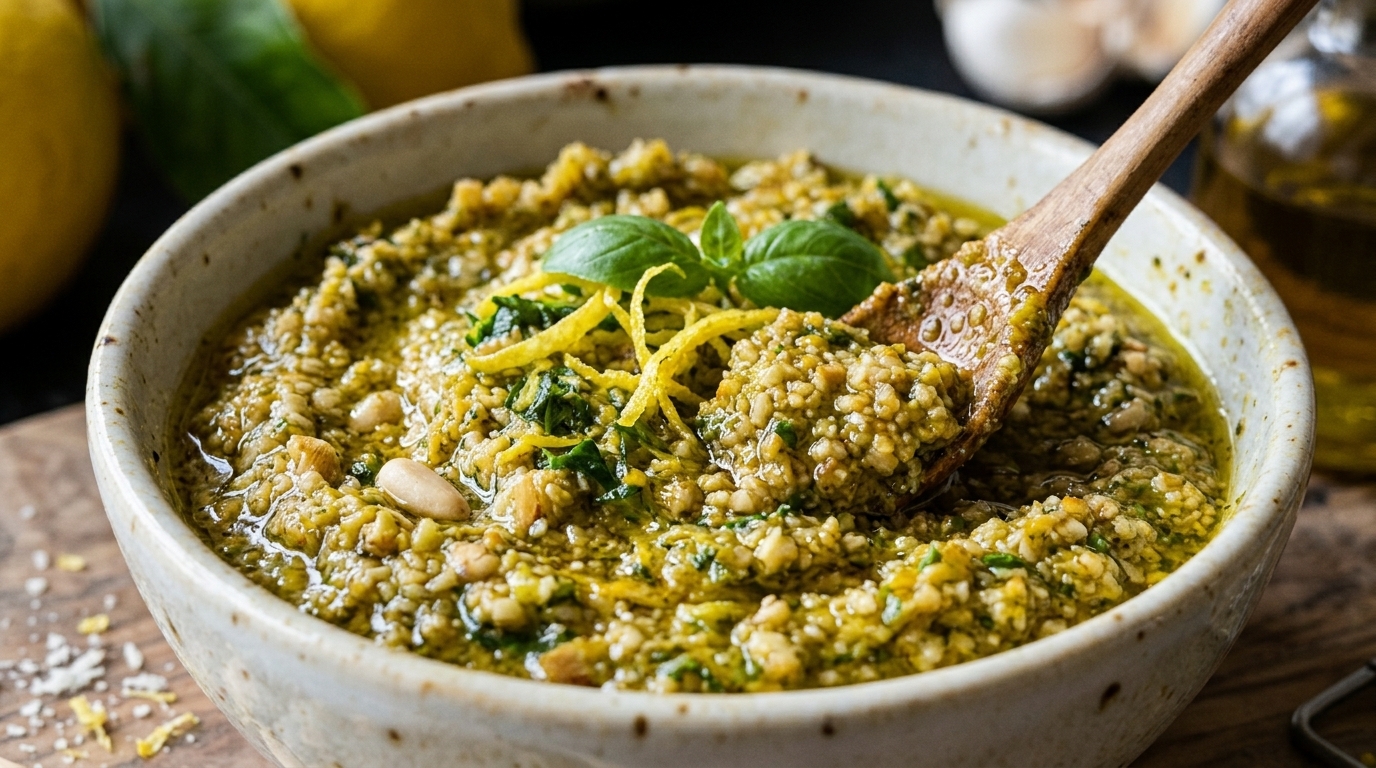
Lemon pesto is a recipe whose fragrance and flavour instantly bring Italy to mind: from its aroma to its taste, a single mouthful is enough to conjure up a typically Italian scene. The fragrance of the lemon zest fills the kitchen even before the pesto is ready. Then it is up to the extra virgin olive oil to soften the fresh, intense notes released by the zest and make them linger.
Finally, basil and parsley add a touch of colour and aroma, while almonds and pine nuts give the mixture body, turning the acidity of the lemon into a creamy, balanced, Mediterranean sauce. In this article, we will explain how to make lemon pesto at home, step by step, with some suggestions for variations and pairings and tips on how to fix any problems along the way.

Lemon pesto: a fresh, aromatic sauce
Lemon pesto is an excellent sauce that is quick to prepare and needs no cooking. It is a tasty alternative that requires no special skills and can transform a simple plate of pasta, a main course or some crostini.
There are just a few easy steps: in short, all you need to do is blend the aromatic part of the lemon with oil, nuts, herbs and, if you like, cheese.
This recipe has only a few ingredients, which is why their quality is essential for the best result. In particular, the lemon zest and juice are the main ingredient of the recipe, while the nuts contribute to the texture of the pesto and the basil and parsley complete its aromatic profile.
Zest, juice and pith: which to use
When you take the lemon zest for this recipe, it is important to know how to remove it and which part to add to the pesto. It is well known that lemon peel has several beneficial properties as well as a wonderful aroma, but adding all of it to a dish could spoil the final result.
The only part to add to any recipe is the coloured part, or flavedo, while the white part, or albedo, should be avoided. The reason for this is the distinctly bitter taste of the white part of citrus peel, which throws the flavours of a recipe off balance.
The flavedo, on the other hand, is rich in essential oils, aromas and flavour that can completely transform some dishes. This does not mean that the albedo must always be discarded entirely, but only when using varieties with a particularly thick peel, so as to avoid a bitter taste.
Another point to bear in mind is that, in recipes that use citrus zest, it is essential to make sure the peel is suitable for eating. For this reason, we recommend using only lemons with an edible or untreated peel for lemon pesto too, so as not to put your health at risk.
Finally, lemon juice is another important ingredient for balancing the acidity and flavour of the pesto. However, do not overdo it: the main fragrance of the sauce will come from the zest, so you avoid ending up with a sauce that tastes too sharp.
Which lemons to choose for pesto
To help you choose the best lemons for your pesto, here is a list of criteria to follow:
- edible peel;
- intense fragrance;
- undamaged fruit;
- plenty of juice;
- a balance between acidity and aroma.
It is also essential to wash and dry the lemons well before using them, to grate the zest finely, stopping when the white part appears, and to strain the juice. Among Tenuta Donna Fina’s lemon varieties, Primo Fiore has a delicate, balanced flavour and plenty of juice, while our Sicilian lemons have a bolder, typically Mediterranean flavour.
Lemon pesto: ingredients and quantities
As mentioned, lemon pesto is made raw and requires only a few ingredients. The main challenge of this recipe is therefore finding the right balance between zest, juice, nuts, cheese and oil. The lemon should be the star, without making the sauce too bitter or too sour.
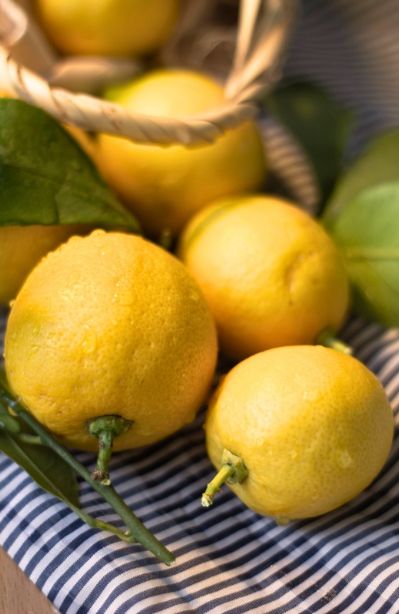
Lemon pesto ingredients
For about 250–300 g of pesto:
Lemon Zest
Donna Fina
2 medium lemons
Lemon Juice
Donna Fina
50 ml
Blanched almonds
40 g
Pine nuts
20 g
Grated Parmesan
40 g
Fresh basil
10 g
Fresh parsley
5 g
Garlic
Half a clove
Extra virgin olive oil
90 ml
Salt
1 pinch
Black pepper
to taste
Lemon pesto: step-by-step recipe
- Wash the lemons under running water and dry them with a clean cloth. Remove the zest with a fine grater or a vegetable peeler, stopping when the white part appears;
- Put the zest in a bowl and squeeze the lemons. Strain the juice through a sieve to remove the pips and any bits of pulp. Weigh or measure the juice and set it aside;
- Put the almonds and pine nuts in the bowl of a food processor. Blend in short pulses to get fine crumbs without overheating the nuts;
- Add the lemon zest, basil, parsley and, if you like, half a clove of garlic. Add the Parmesan and part of the oil. Then blend again in short pulses, pouring in the rest of the oil in a thin stream and adding the lemon juice a little at a time;
- Every so often, stop to scrape the mixture down from the sides of the bowl and check the texture: it does not have to become completely smooth and can be slightly grainy.
Now taste the pesto and check the balance between fragrance, acidity and saltiness. If the mixture is too thick, add a little oil or a teaspoon of cold water. If, on the other hand, it is too sour, you can correct it with a small amount of almonds, Parmesan and oil, adding the ingredients gradually.
If the pesto is too oily, do not add more nuts all at once. To use it with pasta, simply add a little pasta cooking water when tossing the pasta with the sauce. Adjust the salt only at the end, as the Parmesan already adds saltiness.
Pasta with lemon pesto
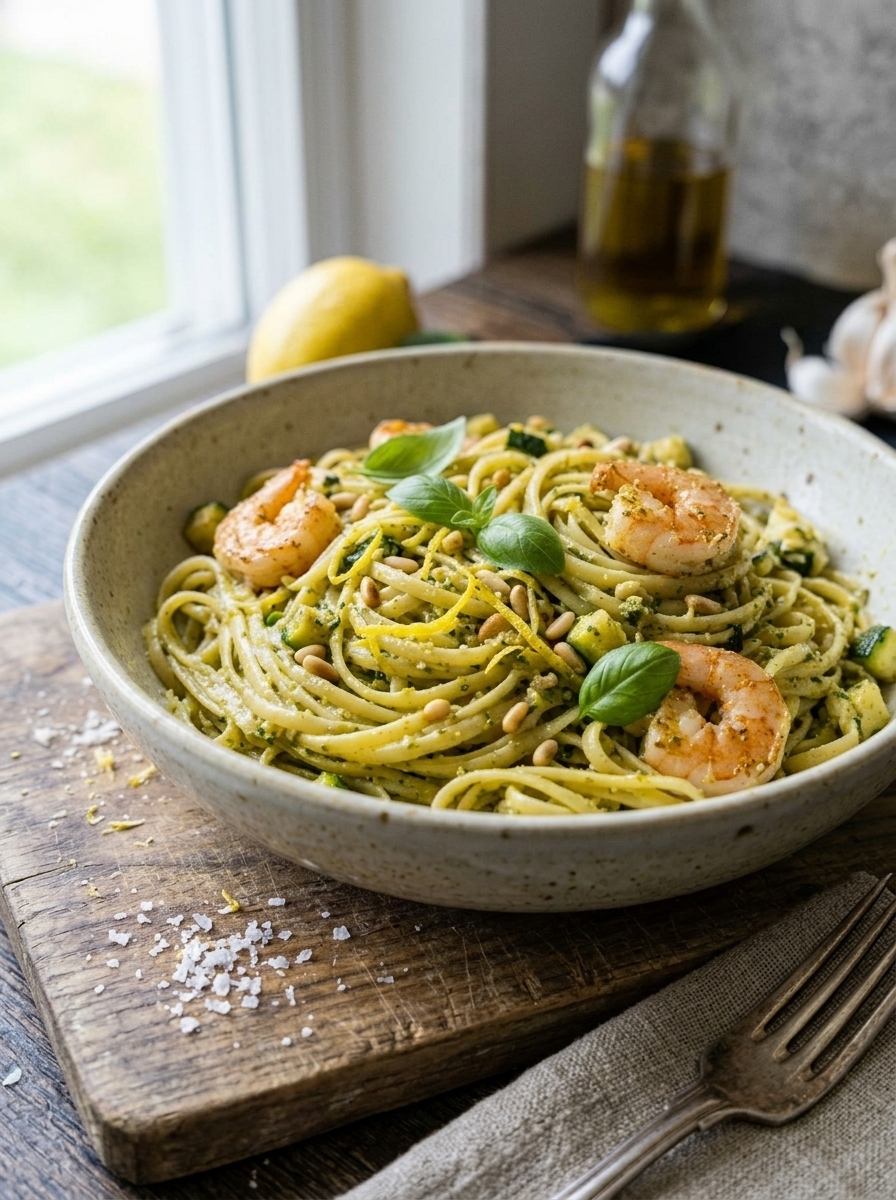
One of the ways to use lemon pesto is undoubtedly as a sauce for a quick, fragrant pasta dish. As it is a raw sauce, it should not be cooked for long: direct heat can dull the fragrance of the zest and make the sauce less balanced.
Which pasta shape to choose
Long shapes such as spaghetti, linguine and bavette hold the pesto well and bring out its creamy texture. Trofie are also a good choice, because their shape holds on to the sauce.
For a more substantial version, you can choose mezze maniche, fusilli or penne rigate. In this case, the pasta will catch the pesto in its ridges, and you can add prawns, courgettes or grilled vegetables.
How to use the cooking water to make the sauce creamy
Cook the pasta in salted water and, before draining it, set aside a cup of the cooking water. Transfer the al dente pasta to a large bowl and add the lemon pesto.
Pour in two or three tablespoons of the cooking water and stir vigorously. The starch will help make the sauce creamier and coat the pasta. If it is still too thick, add more water a tablespoon at a time.
It is best not to toss the pasta with the pesto over a high heat: mix it in a bowl or in a pan that has already been taken off the heat.
Lemon pesto in the Thermomix
Lemon pesto can also be made in the Thermomix, keeping the preparation cold. As times and speeds may vary depending on the model, it is important not to use the heat function and to work in short pulses, checking the mixture between one step and the next.
Preparing the ingredients for the mixing bowl
Wash and dry the lemons, then remove only the yellow part of the zest. Squeeze the fruit and strain the juice. Carefully wash and dry the basil and parsley as well, because any leftover water can make the pesto runnier.
Also prepare:
- almonds;
- pine nuts;
- Parmesan;
- garlic, if using;
- oil;
- salt;
- lemon juice.
It is best to weigh the ingredients before you start, because the pesto is made quickly and it will be easier to adjust its texture at the end.
Blend in pulses and check the texture
Put the almonds and pine nuts in the mixing bowl and blend them briefly until you have fine crumbs. Add the zest, herbs, Parmesan and garlic, then blend again in pulses.
Add the oil and part of the juice, blending the mixture in short bursts. Stop to scrape the ingredients down from the sides of the bowl and check the texture. Continue until you have a creamy pesto, though it does not need to be perfectly smooth.
If the mixture is too thick, add a little oil or cold water. If it is too sour, correct it with a small amount of almonds or Parmesan.
Lemon pesto variations
The basic recipe can be adapted to different tastes or specific dietary needs. However, every substitution changes the texture and flavour, so it should not be presented as exactly equivalent to the version with Parmesan, almonds and pine nuts.
Lemon pesto without garlic
For a more delicate flavour, you can leave out the garlic altogether. The result will be more balanced and will let the fragrance of the zest come through more.
There is no need to replace it with onion or shallot, as both have a stronger flavour and would change the profile of the pesto. If you want a fresher aromatic note, you can slightly increase the amount of basil or parsley.
Lemon pesto without cheese
You can also leave out the cheese and adjust the texture with oil and nuts. The cheese-free version will taste fresher and be less savoury. Taste it before adding salt, because the nuts and oil can also affect the final balance.
Nut-free lemon pesto
Almonds and pine nuts are tree nuts, which are often behind certain allergies. If you need to avoid this allergen, make a nut-free version using the lemon, herbs, oil and cheese listed in the recipe.
The result will be runnier and less full-bodied. You can adjust the texture with a little pasta cooking water when you use the pesto as a pasta sauce.
How to use lemon pesto in the kitchen
Lemon pesto is a versatile sauce, but its aromatic profile is intense. It is therefore best paired with ingredients with a balanced flavour, without using too much of it.
With pasta and first courses
The most obvious use is with spaghetti, linguine, bavette and short pasta. You can serve it on its own or pair it with:
- cooked prawns;
- courgettes;
- grilled vegetables;
- white fish;
- ricotta;
- delicate pulses.
It can also be used to dress couscous, rice or other grains, adding it once the base has cooled slightly.
With fish, prawns and vegetables
With white fish and prawns, the pesto should be used sparingly, so that it complements the flavour of the sea without overpowering it. It can be added after cooking or used as a finishing sauce.
It also goes well with courgettes, fennel, potatoes and grilled aubergines. In these cases, the citrus note creates a contrast with the sweet, toasted flavour of the vegetables.
On crostini and other pairings
You can spread the pesto on crostini and toast, adding it shortly before serving. It is also good for finishing canapés, fresh cheeses and raw vegetables.
If you are using it for an aperitivo, make it slightly thicker and add the pesto in small amounts. This way, the lemon remains recognisable without dominating.
How to store the pesto
Lemon pesto is at its most fragrant when freshly made. If you are not using it straight away, transfer it to a clean, closed container suitable for storing food. Cover the pesto and put it in the fridge immediately. You can protect the surface with a thin layer of oil, but this does not replace sealing the container or refrigeration.
Always use a clean spoon to take out the pesto and check its smell, colour and texture before eating it. If there are any changes, mould or unusual smells, do not use it.
Alternatively, you can freeze the pesto in small containers or food-safe moulds, so you only need to defrost the amount you need for one portion of pasta.
Once frozen, transfer the portions to a freezer-safe container or bag. Then defrost them in the fridge and stir them before use. If the texture is firmer, add a little cooking water directly to the pasta.
Tenuta Donna Fina lemons for your pesto
For this recipe, you can choose from Tenuta Donna Fina lemons: the Primo Fiore lemon variety or our Sicilian lemons.
The peel of our citrus fruits is suitable for eating, as our produce is not treated after harvesting. Remember to remove the zest carefully, avoiding the white part, and to add the juice gradually to find the right balance.
Grown on the slopes of Etna, our citrus fruits have a unique flavour, thanks in part to the climate and the volcanic soil in which they grow. Choose the citrus fruits you like best for your recipes from the Tenuta Donna Fina online shop and discover your favourites!
FAQ – Frequently asked questions about lemon pesto
Can you make lemon pesto with the peel?
Yes, but you should only use lemons whose peel is suitable for eating and wash them thoroughly. The yellow part contains the most intense aromas, while the white part can make the pesto bitter. That is why it is best to remove the zest carefully and add the juice a little at a time.
Which lemons should you use for pesto?
Choose lemons that are fragrant, undamaged and with an edible peel, like the varieties available from Tenuta Donna Fina. The recipe does not depend only on the variety, but also on ripeness, juiciness and the balance between the aroma of the zest and the acidity of the juice.
How can you make lemon pesto less bitter?
If the pesto is slightly bitter, you can gradually add oil, almonds or Parmesan, tasting after each addition. Strong bitterness often comes from the white part of the peel or from an oil with too robust a flavour. Do not automatically add sugar, as it would alter the profile of the sauce.
Can you make lemon pesto without nuts?
Yes, you can make a version without almonds and pine nuts, but it will be runnier and the flavour will change. If you have a tree nut allergy, always check all the ingredients and any possible cross-contamination stated on the packaging.
How long does lemon pesto keep in the fridge?
Lemon pesto is best freshly made. If you want to keep it, transfer it to a clean, closed container and put it straight in the fridge, following a cautious timeframe and the guidance for the ingredients used. To keep it for longer, you can freeze it in small portions and defrost it in the fridge.
All flavor, no risks
We believe in the quality of our citrus fruits and avocados, and we stand by them every day. Try them now.
If you’re not completely satisfied with something, contact us via WhatsApp or email us at tenuta@donnafina.it: we’ll respond within 24 hours (or sooner, if we’re not out among our trees) and will immediately issue a refund or send a replacement.
Related posts
Avocado mayonnaise: Vegan, light recipe and variations

Citrus Biscuits: An Easy Recipe and Variations to Try at Home

Citrus Bundt Cake: A Light Recipe for Breakfast

Avocado pasta: five creamy and creative variations

Citrus Sauces: Five recipes to accompany your dishes

